Jewelry Making Equipment
Improve your jewelry making skills.

Weboldal bejelentése
Szabálysértő honlap?
Kérünk, jelentsd be!
Ügyfélszolgálat
In every jewelry workshop, from small artisan studios to large manufacturing floors, there is a quiet byproduct that often goes unnoticed: jewelry dust. Though it may look like harmless debris, this fine residue is far more valuable than it appears. Understanding what jewelry dust is—and why collecting it matters—can make a significant difference in both profitability and sustainability.
Jewelry dust is created during routine processes such as filing, sanding, grinding, polishing, engraving, and stone setting. Whenever precious metals like gold, silver, platinum, or palladium are shaped or finished, tiny particles are released into the air or settle onto work surfaces, floors, and tools. Over time, these particles accumulate in polishing cloths, filters, vacuum bags, and even on the jeweler’s bench pin.
What makes jewelry dust especially important is its hidden value. Even though individual particles are microscopic, together they can contain a surprisingly high concentration of precious metal. A workshop that ignores dust collection may unknowingly discard grams of gold or silver each year. For professional jewelers and serious hobbyists alike, this represents real money literally being swept away.
Beyond financial reasons, collecting jewelry dust is also a matter of good workshop practice. Fine metal particles can be harmful if inhaled over long periods, especially during polishing and grinding. Effective dust collection systems—such as bench-mounted extractors, polishing hoods, and filtered vacuums—not only recover valuable material but also improve air quality and protect the jeweler’s health. Clean air leads to a safer and more comfortable working environment, reducing fatigue and long-term health risks.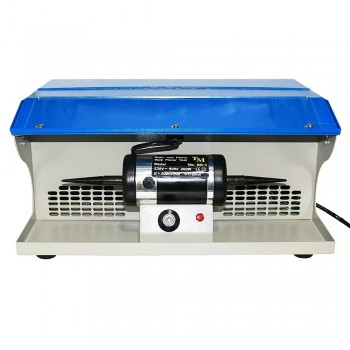
Environmental responsibility is another key factor. Mining precious metals has a significant ecological footprint, involving energy-intensive extraction and chemical processing. By recovering and recycling jewelry dust, jewelers reduce the demand for newly mined materials. This small but meaningful step contributes to a more sustainable and ethical jewelry industry, aligning craftsmanship with environmental awareness.
Collecting jewelry dust does not require overly complex equipment. Simple measures—such as dedicated polishing boxes, floor mats under workbenches, sealed vacuum systems, and jewelry dust collectors—can dramatically increase recovery rates. Many jewelers periodically send accumulated dust and sweeps to metal refiners, who extract and return the recovered precious metals in usable form.
In conclusion, jewelry dust is far from ordinary waste. It is a valuable resource, a health consideration, and an environmental opportunity rolled into one. By recognizing its importance and taking steps to collect it, jewelers can protect their investment, improve their working conditions, and contribute to a more sustainable future—proving that even the smallest particles can make a meaningful impact.
https://www.jewelerstoolsmall.com/goods-1112.html
Honlapkészítés ingyen:
Ez a weblapszerkesztő alkalmas
ingyen weboldal,
ingyen honlap készítés...
Mai: 21
Tegnapi: 16
Heti: 64
Havi: 408
Össz.: 1 943
Látogatottság növelés
Jewelry Making Equipment - © 2008 - 2026 - jewelerstoolsmallus.hupont.hu