Jewelry Making Equipment
Improve your jewelry making skills.

Weboldal bejelentése
Szabálysértő honlap?
Kérünk, jelentsd be!
Ügyfélszolgálat
A jewelry faceting machine is a precision tool used to cut and polish gemstones into symmetrical, light-reflecting facets. Mastering its use requires both technical understanding and careful attention to detail. Below is a step-by-step guide designed to help beginners and intermediate users operate a jewelry faceting machine effectively and safely.
Understand the Components
Before starting, familiarize yourself with the main parts of the machine: the mast, quill, handpiece, index gear, lap (grinding disc), and water drip system. Each component plays a critical role in controlling angles, positioning, and polishing accuracy.
Select and Prepare the Rough Stone
Choose a gemstone rough suitable for faceting, considering clarity, size, and shape. Clean the stone thoroughly to remove dirt or debris. Examine it under proper lighting to identify inclusions and determine the optimal orientation for cutting.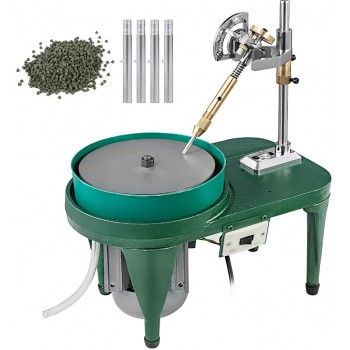
Dopping the Stone
Attach the gemstone to a dop stick using wax or epoxy. This process, known as dopping, secures the stone for precise handling. Ensure the stone is centered and aligned properly, as misalignment can affect symmetry and final quality.
Set the Angle and Index
Adjust the faceting machine to the desired angle using the protractor or digital display. Select the correct index gear position to control the rotational placement of each facet. These settings are determined by the chosen faceting design.
Begin Cutting (Rough Faceting)
Start with a coarse lap (typically 260–600 grit) to shape the stone. Gently lower the stone onto the rotating lap while applying consistent pressure. Use water lubrication to prevent overheating and reduce dust. Cut each facet according to the design pattern.
Fine Cutting and Pre-Polishing
Switch to a finer lap (1200–3000 grit) to refine the facets. This stage removes scratches from the coarse cutting phase and improves the accuracy of facet edges. Maintain steady movements and frequently check alignment.
Polishing the Facets
Use a polishing lap with appropriate compounds such as diamond paste or oxide polish. Carefully polish each facet until it achieves a mirror-like finish. Precision is crucial here, as over-polishing can round edges and reduce brilliance.
Transfer and Cut the Pavilion/Crown
After completing one side (usually the pavilion), transfer the stone to another dop to work on the opposite side (the crown). Repeat the cutting and polishing process, ensuring symmetry between both halves.
Final Inspection and Cleaning
Inspect the finished gemstone under magnification. Look for symmetry, sharp facet junctions, and overall brilliance. Clean the stone thoroughly to remove any polishing residue.
Using a jewelry faceting machine is both an art and a science. With practice, patience, and attention to detail, users can transform rough stones into dazzling gemstones. Following a structured process ensures consistency, enhances quality, and minimizes costly mistakes.
Related articles: https://blog.libero.it/wp/jewelerstoolsmall/2026/04/09/optimizing-your-small-gold-melting-furnace-for-jewelry-production/
Honlapkészítés ingyen:
Ez a weblapszerkesztő alkalmas
ingyen weboldal,
ingyen honlap készítés...
Mai: 6
Tegnapi: 16
Heti: 49
Havi: 393
Össz.: 1 928
Látogatottság növelés
Jewelry Making Equipment - © 2008 - 2026 - jewelerstoolsmallus.hupont.hu