Jewelry Making Equipment
Improve your jewelry making skills.

Weboldal bejelentése
Szabálysértő honlap?
Kérünk, jelentsd be!
Ügyfélszolgálat
In jewelry making, few tools are as transformative as the jewelry rolling mill machine. Compact yet powerful, this machine allows metalsmiths to shape, thin, texture, and strengthen metal with remarkable precision. Whether in a professional studio or a home workshop, understanding the different types of jewelry rolling mills helps artisans choose the right model for their creative goals.
1. Flat Rolling Mills
Flat rolling mills are the most common type used in jewelry studios. They feature two smooth, hardened steel rollers that compress metal into thinner sheets or strips. By gradually reducing thickness through multiple passes, jewelers can achieve consistent gauges without compromising structural integrity. Flat mills are ideal for preparing sheet metal for fabrication, forming bezels, or refining recycled metal into workable stock. Many models also include side rollers specifically designed for wire rolling, offering added versatility in a single machine.
2. Combination Rolling Mills
Combination rolling mills integrate both flat and patterned rollers into one unit. In addition to smooth rollers for sheet reduction, they typically include grooved sections for forming square or half-round wire. This multifunctional design makes them especially appealing to small studios or hobbyists with limited space. With a combination mill, artisans can shift seamlessly from reducing sheet thickness to creating wire profiles for rings, bangles, or clasps. The flexibility enhances workflow efficiency and reduces the need for multiple machines.
3. Pattern or Texture Rolling Mills
Texture rolling mills are designed to imprint patterns onto metal surfaces. Instead of focusing solely on thickness reduction, these mills use engraved rollers or texture plates to transfer intricate designs under high pressure. Jewelers can achieve floral motifs, geometric lines, or organic textures in a single pass. Some artisans even experiment with non-metal materials—such as fabric, paper, or leaves—to create unique impressions. This type of mill expands creative possibilities, transforming simple sheet metal into visually dynamic components.
4. Manual vs. Motorized Rolling Mills
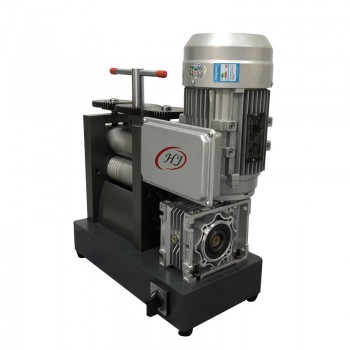
Most jewelry rolling mills are manually operated with a hand crank, providing precise control over pressure and speed. Manual mills are durable, affordable, and well-suited for small-batch production. However, for larger workshops or repetitive tasks, motorized rolling mills offer increased efficiency and reduced physical strain. Motorized systems ensure consistent torque and allow jewelers to focus more on alignment and design rather than exertion.
5. Durability and Material Considerations
Regardless of type, high-quality rolling mills feature hardened and polished steel rollers to resist wear and maintain smooth operation. Proper maintenance—cleaning, lubrication, and avoiding excessive force—extends machine lifespan and ensures consistent results. Investing in a well-built rolling mill often pays dividends in both performance and creative freedom.
In conclusion, jewelry rolling mills are not one-size-fits-all tools. From flat and combination models to texture-focused designs and motorized systems, each type serves a distinct purpose. By understanding their differences, jewelers can select the rolling mill that best aligns with their techniques, production scale, and artistic vision—turning raw metal into refined expression with precision and creativity.
https://www.jewelerstoolsmall.com/goods-1429.html
Honlapkészítés ingyen:
Ez a weblapszerkesztő alkalmas
ingyen weboldal,
ingyen honlap készítés...
Mai: 17
Tegnapi: 16
Heti: 60
Havi: 404
Össz.: 1 939
Látogatottság növelés
Jewelry Making Equipment - © 2008 - 2026 - jewelerstoolsmallus.hupont.hu